


Breadcrumb
Pacific researcher’s unique approach to epilepsy research drives neuroscience discoveries
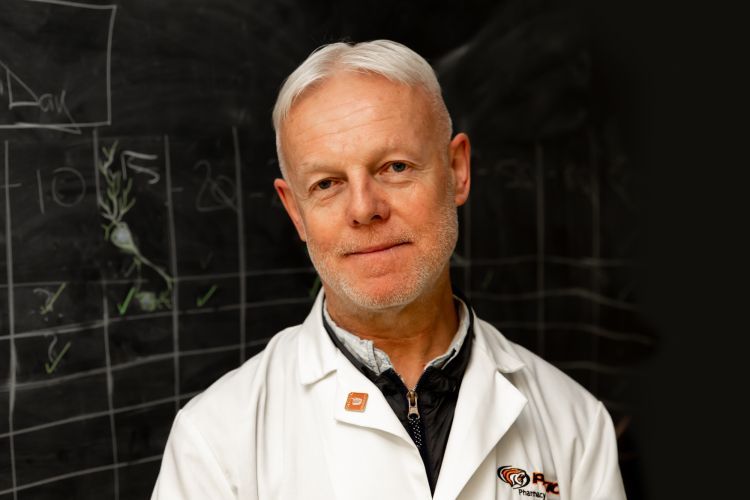
Within the confines of a petri dish, Robert F. Halliwell, PhD, professor of pharmaceutical sciences, can create conditions remarkably similar to the human brain. His research is laying the groundwork for advances in seizure treatments.
For the past 5 years, Dr. Halliwell has been creating tiny brain-like structures in his lab using induced pluripotent stem cells. These stem cells begin as ordinary adult cells but are reprogrammed to regain the ability to develop into nearly any cell in the body, making them a powerful tool for research.
“Cerebral organoids are made up of just a few hundred thousand cells, compared to the nearly one hundred billion neurons in the human brain,” said Dr. Halliwell. “They have a remarkable ability to organize themselves and replicate some of the brain’s complex architecture. We can evoke seizure-like activity in these organoids to model epilepsy and then test new drugs for their antiseizure effects.”
Epilepsy is a chronic brain disorder characterized by recurrent seizure episodes. Individuals with epilepsy can experience sudden loss of consciousness or muscle control. There are several categories of seizures — tonic-clonic, atonic, absence, myoclonic — and while symptoms vary, all types can have a profound impact on an individual’s quality of life. The Centers for Disease Control and Prevention estimates over 3.5 million adults and children have epilepsy and according to the World Health Organization approximately 50 million people are affected globally.
“We have already identified a class of novel drugs that work to inhibit epileptic activity.”
Dr. Halliwell’s approach overcome barriers faced by neuroscientists and pharmaceutical scientists who are limited by test models with significant physiological differences and the neurological complexity of the human cerebral cortex.
“Using our cerebral organoid model, the discovery process is faster, less costly and more efficient,” he said. “We have already identified a class of novel drugs that work to inhibit epileptic activity. The finding we published have prompted other labs to start researching these drugs.”
This progress is especially important given the current treatment landscape.
“Despite having 34 different [U.S. Food and Drug Administration approved] medicines to treat epilepsy, over one-third of patients still suffer with uncontrolled seizures,” explains Dr. Halliwell. “There is therefore a pressing need for new antiseizure medicines.”
This research illustrates how innovation and purpose can converge to impact patient care.