



Breadcrumb
A Professor and a President
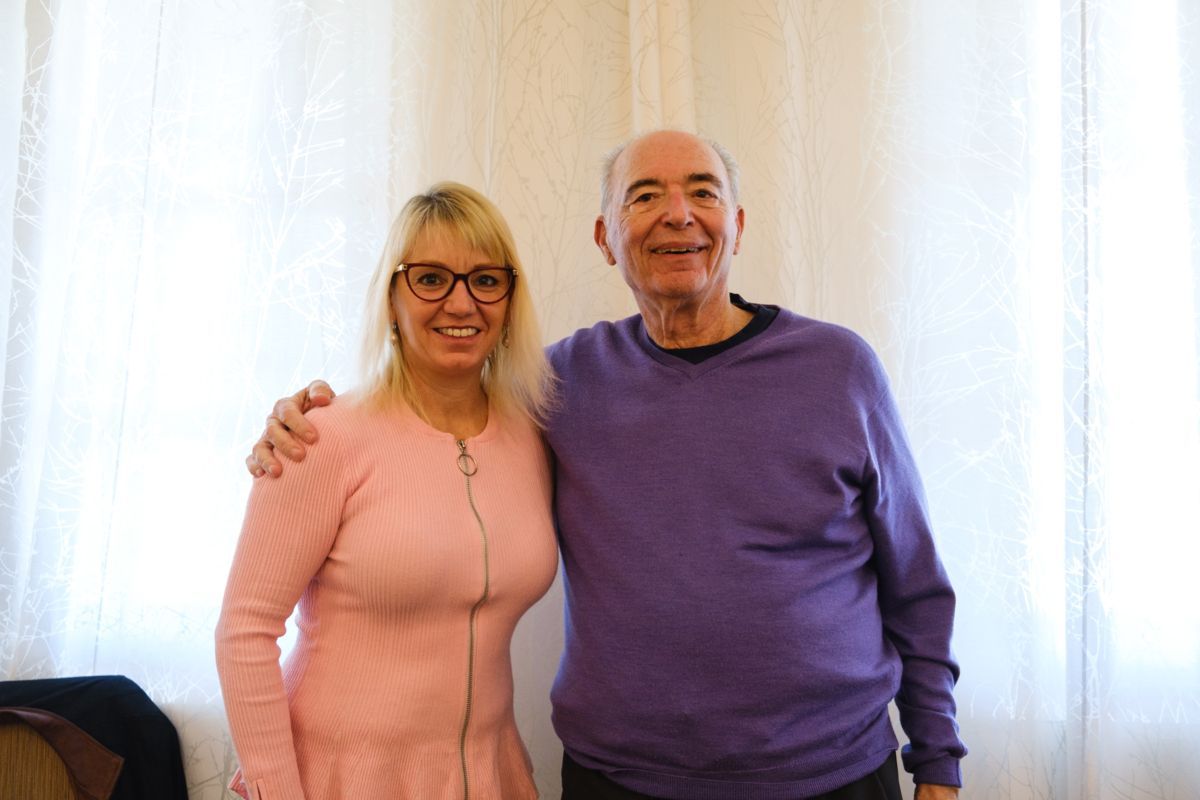

“Now cracks a noble heart.”
—William Shakespeare, “Hamlet”
Don DeRosa was the noble heart of University of the Pacific. Words will always fall short of capturing the totality of this extraordinary man and the singular life he led. Elegant and eloquent, Don had a capacious intellect. He was unreservedly charming and compassionate—and very Italian (I have always thought of him as “the Don”). As the son of working-class Italian immigrants, he used to joke about the fact that growing up, all of his friends’ last names ended in vowels. Though it is hard to imagine that he ever struggled in the classroom, Don went through elementary and secondary school believing that he lacked the intelligence to succeed. He had few resources to fall back on as a kid; his family was poor and at one point housing insecure, so for a time, he lived with his grandmother. Though Don never planned to go to college, he earned a football scholarship to American International University in Massachusetts, where a psychology professor took him under his wing and Don fell in love with the field. He received his PhD in Psychology at Kent State University and later became a Professor of Psychology at Bowling Green University, where he championed the importance of social and emotional intelligence long before it had a name. Now, more than half a century after Don’s pioneering work, we recognize that the ability to be open, perceptive and attuned to social dynamics and emotional cues is an essential human attribute that correlates with personal and professional success. Don envisioned a world in which our interactions with others are kinder, more attentive and more genuine. Honoring that legacy is the debt of gratitude we owe him.
As a leader, Don was innovative, bold, creative, and deliberate. When he engaged in conversations with students, parents, faculty and fellow administrators, he was patient and receptive, always making eye contact and asking poignant questions. In fact, anyone who ever crossed paths with him knows that Don was an intent listener, generous with his time and transparently sincere. He had a way of making anyone he spoke to feel like the only person in the room. I knew Don for nearly thirty years, and toward the end of his life, he and I became close friends. A few years ago, after the onset of Parkinson’s Disease, he asked me to help him edit and organize his memoirs. This project—and the honor of working with Don in this capacity—has been one of the most meaningful journeys I have ever undertaken. Don gave me a priceless gift: a view into his life, before, during and after Pacific.
As our collaboration developed, Don and I communicated nearly daily—over the phone, in emails and in texts. When he was robbed of his ability to type, he dictated entire vignettes for me to transcribe. Three weeks before he passed, I visited him at his home in Greensboro, North Carolina. Leaving his bedside, I whispered to Don that I loved him and that I would see him again. And though I didn’t, he left me with my favorite memory of him. When I arrived that afternoon in March of 2026, Karen led me into his room and handed me a pencil and a hard copy of the final story in his collection—a vignette about the 49ers’ summer training camp at Pacific. Despite his impairment from the advanced stage of the disease, I could see flashes of the vibrant, formidable and gracious man we all knew. I scribbled notes as he recounted a few remaining details and, after half an hour or so, Don was tired and needed to rest. I wasn’t sure that I was going to have the opportunity to speak with him again that day—or ever. To my surprise, an hour later, Don was wheeled into the kitchen where Karen and I were catching up. He had an enormous grin on his face and that old familiar fire in his eyes. Don’s final words to me were: “Now let’s write volume two.”