

Breadcrumb
A New Year's message from President Callahan
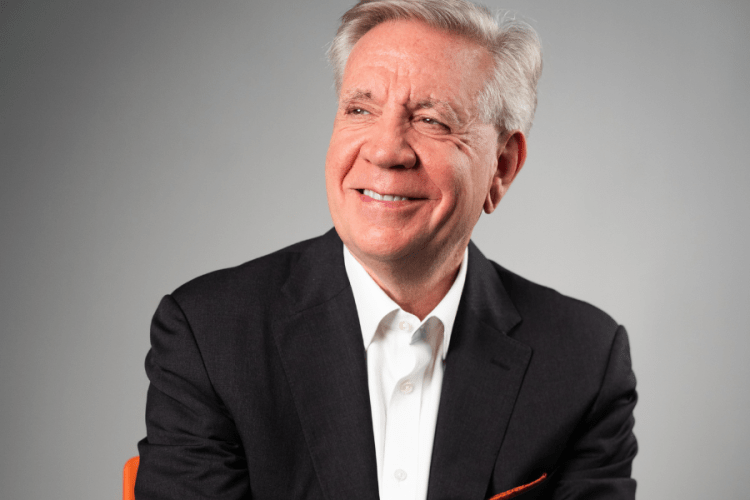
President Christopher Callahan
Jan. 5, 2026
Dear Pacificans,
As we start the new year, I want to take a moment to thank Pacificans everywhere—our students, faculty, staff, alumni, friends and supporters from across the street to around the globe. Thanks to all of you, we had a remarkable 2025, and 2026 promises to be even better.
This past year we saw students such as Aimee MacDonald from the Conservatory of Music and a team from the School of Engineering and Computer Science receive national recognition. Stellar faculty, including Mamoun Alhamadsheh, Chris Torres and Courtney Lehmann, conducted groundbreaking research and creative work in areas as diverse as heart disease, paleontology and Shakespeare while others created new curriculum, degree programs and student success initiatives.
Our alumni made their marks in 2025 too, including Filo Ebid ’23 bursting onto the national stage on American Idol, Halima Lucas ’13 winning an Emmy Award for her work on the Disney TV series “Moon Girl and Devil Dinosaur” and Sem Verbeek ’16 capturing the Wimbledon mixed doubles championship.
The Pacific community heard from scores of global experts throughout the year, including award-winning journalist Judy Woodruff, actor Giancarlo Esposito and higher education thought leader Cathy Davidson. Those guests visited a university that last year became one of only 16 in the nation powered 100 percent from renewable electrical sources and served as the backdrop for the new HBO comedy series, “Rooster,” starring Steve Carell.
Philanthropy fueled student-centric initiatives such as the reopening of the once-abandoned Manor Hall for student veterans and the expansion of the Eglet Center for Advocacy and Dispute Resolution at the McGeorge School of Law. Meanwhile, nearly 4,600 Pacificans helped set new fundraising records, giving more than $2.5 million in a single day for Pacific Gives.
Our Pacific Tigers also had a stellar year on our fields, courts and pool, with both men’s swimming and men’s water polo winning conference titles and the golf team earning an NCAA tournament bid. The year also saw the addition of two new sports—men’s cross country and track and field, and the addition of diving to both women’s and men’s swim programs. We also brought back a Tigers cheer squad for the first time in a generation.
All this and more led to our second-best enrollment year in our 174-year history—6,852 students across our three campuses from 43 states and 57 countries—at a time when many of our peers are battling steady enrollment declines. And future Tigers were introduced to the university at the Pacific Summer High School Institute, which hosted nearly 1,800 students in the two-week residential living and learning program.
Perhaps the most visible initiative came towards the end of 2025 with the announcement that Pacific is now the Official Higher Education Partner of the San Francisco 49ers, a special relationship that is already paying off in new opportunities for our students and faculty and increased visibility for our university that for too long was known as a “hidden gem.”
Others are noticing Pacific on the rise. We earned our highest national university ranking ever— No. 85 by The Wall Street Journal. We were among the first U.S. colleges to be designated as a Top Opportunity College by the Carnegie Foundation. And we were among the 75 “Dream Schools” spotlighted by higher education author Jeff Selingo.
A great year indeed, thanks to all of you. But 2026 is shaping up to exceed even those amazing advances.
Thanks to our dedicated faculty, students and staff across all three campuses, you will be hearing next week about a new national designation recognizing our exemplary support and service to our communities.
On the San Francisco Campus, our audiology faculty at the School of Health Sciences today are opening a state-of-the-art learning center that will rival the best in the country. Later in the year, our Arthur A. Dugoni School of Dentistry will open ambulatory surgical centers in San Francisco and Sacramento, serving those in need while providing unique learning opportunities for our students.
On the Stockton Campus, two capital projects funded 100 percent by philanthropy will open this fall: the Jie Du Inn, which will host families, prospective students and other guests while providing an experiential learning home for students at the Eberhardt School of Business, and the Student-Athlete and Sports Medicine Center, which will provide the best care for our student-athletes and superb learning opportunities for our athletic training students. Pacific Athletics also is adding two more sports this year—men’s volleyball and STUNT.
We will unveil the new Southwest Hall, which will retain the historic feel of the original residence hall on the outside but provide a 21st-century living-learning home for today’s students. That will be part of a rethinking of housing on the Stockton Campus that will make available some campus apartments for staff and faculty (details to come shortly).
We will continue work through the year on strengthening our shared governance processes, conduct an external review to ensure fair compensation for faculty and staff, continue work on our WASC reaccreditation and engage in an external review of our administrative operations so we can continue to compete at the highest level in an ever-changing higher education landscape.
And throughout 2026, we will celebrate the 175th anniversary of California’s first and oldest university.
But what could be the most transformational—although I want to emphasize only a possibility at this point—is the creation of a medical school at our university. This past fall we hired a global consulting firm specializing in the creation of medical schools to determine whether a Stockton Campus-based medical school was even feasible. The firm concluded that our region is in desperate need of a medical school, that there is a large pool of highly qualified candidates and that Pacific—with our financial stability, fundraising capability and our existing strengths at the School of Health Sciences, Dugoni School of Dentistry, Thomas J. Long School of Pharmacy and the College of the Pacific—could indeed build a high-quality, accredited medical school that would add richly to our university while serving our communities.
The two major hurdles identified by the consultants are the ones we anticipated: Forging a deep and lasting clinical partnership to deliver the required clinical rotations and acquiring major new one-time financial resources through donors and governmental support that would pay for both the construction of a medical school building and fully cover the projected annual operating deficits in the early years.
While we continue the process of determining definitive answers to those questions, Provost Gretchen Edwalds-Gilbert will begin conversations this month with Academic Council to do a deep dive into the medical school idea, while I start parallel conversations with our Board of Regents. To be clear, we will not ask the Academic Council or the Board of Regents to move forward unless and until we are convinced that we can do so without drawing from existing university resources and can create a great medical school that will be financially self-sustaining. And if we do move forward, this is a long process that would lead to a new school opening no sooner than Fall 2030. Stay tuned as we begin these exciting and important conversations.
Whatever the new year (and beyond) brings to Pacific—and whatever new headwinds might be facing higher education nationally—we will continue to stay our course, guided by our values, centered on the deep belief that all qualified students should have the benefit of a transformational Pacific education no matter their race, religion, ideology or socioeconomic background.
Thank you for your time, attention and all you do for Pacific. I’m looking forward to a great new year, together.
Go Tigers!
Sincerely,
Christopher Callahan
President