


Session 2

Bioengineering and Health Care Technologies

From Sensors to Smart Health Solutions

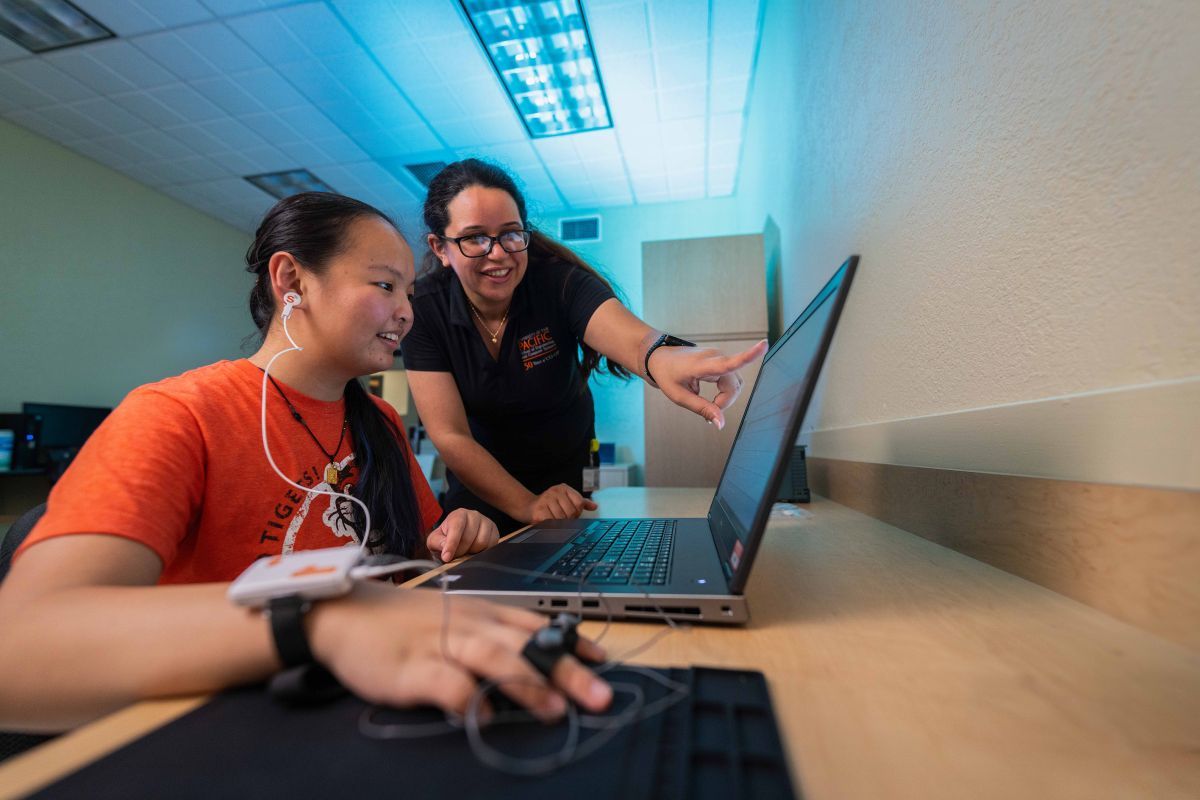
Step into the world of bioengineering and discover how technology can help people live healthier lives. In this hands-on program, students explore wearable devices, medical sensors and health care technologies that allow doctors, researchers and patients to better understand the human body.

Through project-based learning, students will investigate how biological signals such as heart rate and muscle activity are measured, analyzed and turned into meaningful health data. Along the way, they will think like innovators as they explore how modern health care technologies are designed to monitor health, support medical teams and improve quality of life.

Curriculum

Students build a foundation in bioengineering and health care technology through hands-on exploration, data analysis and collaborative problem-solving.

  • Explore how technology can support health and wellness through wearable devices, medical tools and other health care innovations.
  • Identify basic biological signals, such as heart rate and muscle movement, and explain why they are important in understanding the body.
  • Learn how sensors collect information from the body and how that data can be used to monitor and interpret health.
  • Investigate how simple biomedical devices work through hands-on, project-based activities.
  • Build foundational data skills by observing, recording and interpreting biological information.
  • Work collaboratively with classmates to solve problems and complete group projects.
Bioengineering summer lab
Planned Topics

Students explore the scientific and engineering concepts behind wearable health technology while applying what they learn through hands-on experiments and projects.

  • Introduction to wearable technology, including sensors and transducers used in health-monitoring devices.
  • Explore how different sensors work through an Arduino-based experiment testing multiple sensor types.
  • Introduction to the nervous system, with a focus on electrical signals in cells and the resting potential of membranes.
  • Learn about the Nernst equation and its role in understanding how bioelectrical signals are generated.
  • Measure action potentials generated by plant cells through a hands-on laboratory experiment.
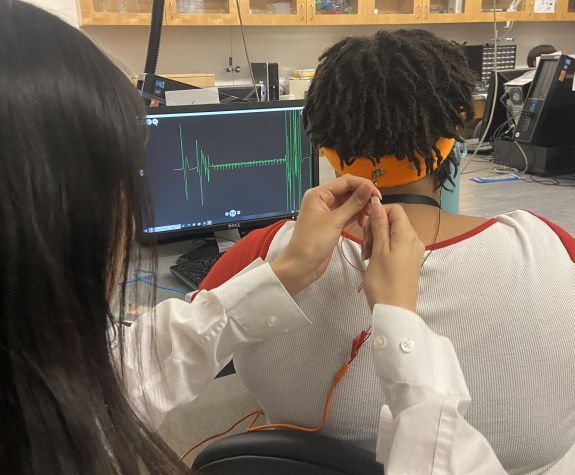
  • Introduction to electrocardiograms (ECG) and electromyograms (EMG) and how they are used to study heart and muscle activity.
  • Conduct experiments measuring the electrical activity of the heart and muscles.
  • Design and carry out an original experiment applying course concepts and methods.
  • Introduction to electroencephalograms (EEG) and the measurement of brain activity.
Summer Institute Logo
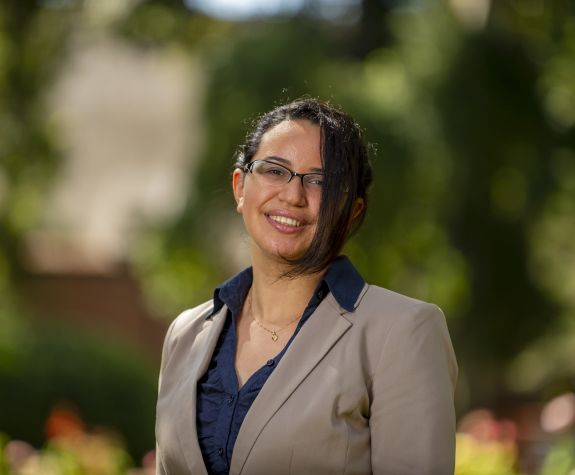
Seyedeh Fatemeh Khatami Firoozabadi
Faculty Lead
Seyedeh Fatemeh Khatami Firoozabadi

Assistant Professor of Bioengineering,  School of Engineering and Computer Science

Ph.D in Biomedical Engineering, University of Connecticut, 2017
Post-doctoral, University of California San Francisco (UCSF), 2017-2019

Professor Khatami Firoozabadi has a PhD in Biomedical Engineering with a focus on neuroscience and algorithm development. She is highly experienced in bio signal processing, data analysis and machine learning.