

Breadcrumb
Beyond match day
Alicia Nguyen ’26, PharmD lost count of the number of times she refreshed her email on Match Day. After years of coursework, clinical rotations and mentorship from faculty and preceptors, everything came down to a single message. When the email finally arrived, Dr. Nguyen paused before opening it.
She had matched with a postgraduate year-one (PGY1) pediatric pharmacy residency at Valley Children’s Hospital.
“When I opened it and saw that I had matched with my first choice, Valley Children’s Hospital, I was completely shocked,” said Dr. Nguyen. “It felt surreal.”
For many pharmacy students, Match Day is viewed as the finish line, the culmination of years of hard work and preparation. In reality, it marks the beginning of an intensive period of professional growth shaped by mentorship, clinical training and increasing responsibility for patient care. Residencies offer doctor of pharmacy graduates an opportunity to strengthen their clinical skills, build confidence as health care providers and explore specialized practice areas. While it is just one of many successful career paths pursued by Pacific graduates, residency remains a sought-after option.
Pacific graduates have consistently excelled in the residency match process. In 2025, Pacific ranked in the top three schools of pharmacy in California for the number of residency matches and in the top 10 nationwide.
Dr. Nguyen credits Pacific faculty and preceptors with helping her successfully navigate the residency application process. Through mock curriculum vitae reviews and interviews, plus question and answer sessions with current residents, she gained valuable insight into the residency process and built confidence heading into interview season. She also credits Pacific’s case-based curriculum with helping her develop the clinical reasoning and communication skills she relied on during rotations and residency interviews.
Drawn to pediatrics early in her pharmacy education, Dr. Nguyen saw residency as the next step toward achieving her career goals.
“Working with pediatric patients has shown me that children are often unable to fully communicate their symptoms or concerns, placing greater responsibility on the health care team to anticipate needs and prevent harm,” she said. “Residency felt like the best next step because it would allow me to gain more exposure to pediatric patient care while further developing my clinical skills.”
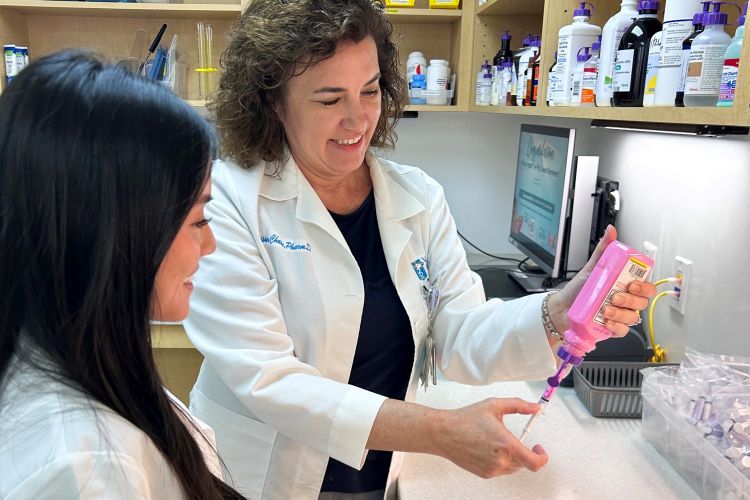
Melissa Chase ’99, PharmD, BCSCP, CPEL is committed to helping Alicia Nguyen ’26, PharmD make the most of her residency experience by providing guidance to develop the skills and confidence she needs for a successful career.
Few understand that journey better than Victoria Lam ’24, PharmD who recently completed her postgraduate year-two (PGY2) ambulatory care residency at Yale New Haven Hospital in New Haven, Connecticut. Working alongside an interdisciplinary health care team, Dr. Lam regularly provided clinical recommendations and learned valuable lessons about patient care and professional growth.
“During residency, I realized it’s really about knowing how to approach problems, think critically, ask thoughtful questions and continue to learn,” said Dr. Lam. “Being prepared means being adaptable and confident in your ability to find the best answer for your patients.”
Years ago, Melissa Chase ’99, PharmD, BCSCP, CPEL anxiously awaited her own Match Day results. Today, she serves as director of pharmacy at Valley Children’s Hospital, where she oversees the residency program and mentors future pharmacists.
Prior to her current role, Dr. Chase served as chief of pharmacy for nearly nine years at the Veterans Affairs Central California Health Care in Fresno where she helped launch their first pharmacy residency program. She brought that same innovative approach and commitment to mentorship to Valley Children’s Hospital where she has worked alongside dedicated colleagues to grow and strengthen the residency program since 2016.
“Pacific graduates are often well-prepared because they learn to think about the whole patient, not just the disease state, and that perspective becomes especially valuable during residency training.”
– Melissa Chase ’99, PharmD, BCSCP, CPEL
For Dr. Chase, residency is about far more than developing clinical expertise.
“Residency is an intense transition from being a student learner to being a licensed practitioner,” she said. “Clinical knowledge is important, but so are communication skills, adaptability, coachability and a patient-centered mindset. Pacific graduates are often well-prepared because they learn to think about the whole patient, not just the disease state, and that perspective becomes especially valuable during residency training.”
Having mentored more than 50 pharmacy residents throughout her career, Dr. Chase views mentorship as an opportunity to help future pharmacists build not only clinical knowledge but also confidence, resilience and professional networks.
“Mentorship has probably been one of the most influential parts of my own professional journey,” she said. “I’ve had the opportunity to learn from incredible pharmacists who invested in my success, and I try to provide that same level of encouragement and support to others.”
As Dr. Nguyen begins her residency at Valley Children’s Hospital, she is eager to deepen her expertise in pediatric care.
“I am most excited to continue growing as a pharmacist and becoming more confident in managing pediatric patients,” she said. “I know the year will be challenging but I am eager for the opportunity to learn and grow every day.”
At Pacific, faculty, preceptors and alumni work together to prepare the next generation of pharmacists through mentorship, hands-on experience and a commitment to lifelong learning. Match Day may mark the beginning of the next chapter but it is the guidance, training and relationships built along the way that help shape the pharmacists they become.