


Breadcrumb
Shaping the future of human health through science

From left: Anujan Ramesh, PhD, MBA, Atefeh Rabiee, PhD, Robert F. Halliwell, PhD, Zhu Zhou ’14, PhD
Behind the unassuming latte-colored doors found along the hallways of Edward and Alice Long Memorial Hall, faculty and graduate students in the Department of Pharmaceutical Sciences are conducting groundbreaking research and making impactful discoveries. Within these laboratories, Pacific researchers are tackling some of the most complex challenges in health care.
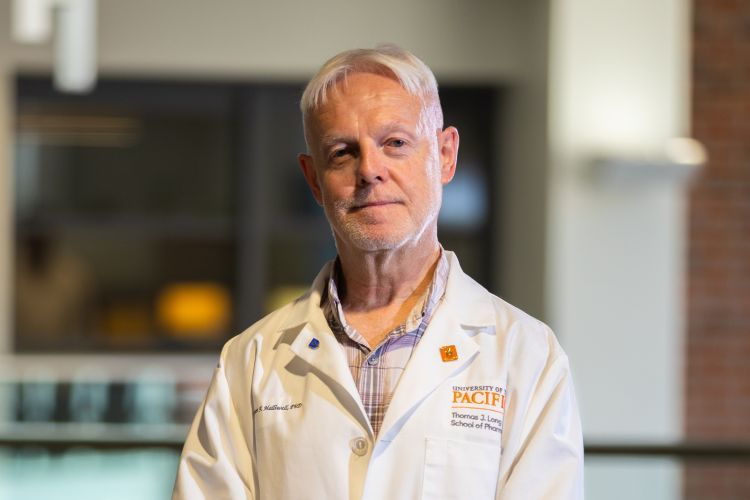
Unique approach accelerates the search for new epilepsy treatments
For more than 3.5 million people living with epilepsy in the United States, finding an effective treatment is challenging. Even with dozens of medications available, more than one-third of patients continue to experience uncontrolled seizures.
By using cerebral organoids, Robert F. Halliwell, PhD, professor of pharmaceutical sciences, creates conditions remarkably similar to the human brain within the confines of a petri dish. Cerebral organoids are lab-grown models of the brain created from reprogrammed adult stem cells. By evoking seizure-like activity in these organoids, Dr. Halliwell can test new drugs for their antiseizure properties.
“Using our cerebral organoid model, the discovery process is faster, less costly and more efficient,” said Dr. Halliwell. “We have already identified a class of novel drugs that work to inhibit epileptic activity and published this work.”
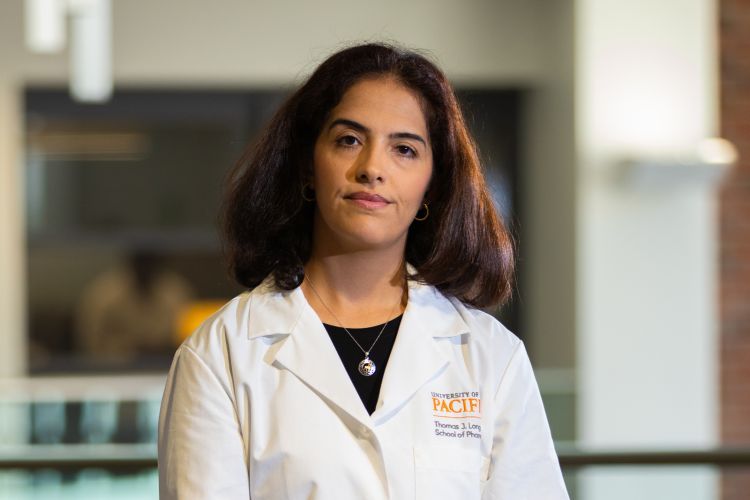
Lipedema research aims to bring hope for patients
The search for a breakthrough for lipedema, a painful condition that affects an estimated one in 10 women, is at the center of research led by Atefeh Rabiee, PhD, associate professor of pharmaceutical sciences. Often misdiagnosed as obesity, lipedema causes abnormal, symmetrical fat accumulation, typically in the arms and legs. Unlike ordinary body fat, lipedema fat is uniquely resistant to traditional weight-loss methods such as diet and exercise, leaving many women feeling powerless as the disease worsens. Despite its prevalence, the condition currently has no effective treatment.
“Our goal is to be the first to clearly define the cellular and mitochondrial defects that make lipedema fat resistant to normal metabolic signals,” said Dr. Rabiee. “Our work is urgently needed to uncover the root causes so we can develop targeted treatments and improve the quality of life for patients.”
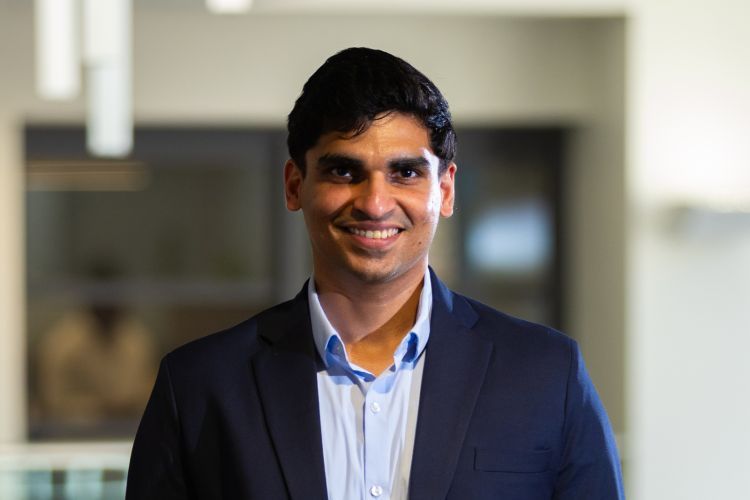
Ionogels could extend drug release from hours to months
Managing a chronic illness often requires frequent injections, an experience that can be painful and difficult to maintain over time. To ease that burden, a cutting-edge class of materials enables the controlled release of a medication over an extended period and could revolutionize the approach to cancer treatments and the management of diseases such as diabetes and autoimmune disorders.
Research by Anujan Ramesh, PhD, MBA, assistant professor of pharmaceutical sciences, focuses on designing ionogels, soft depots injected under the skin that slowly release medication.
“This approach could significantly reduce injection frequency, from daily or weekly dosing to once every few weeks or months, while improving patient quality of life and clinical outcomes,” said Dr. Ramesh. “This research contributes to making advanced biologic therapies more practical, scalable and accessible for real-world use.”
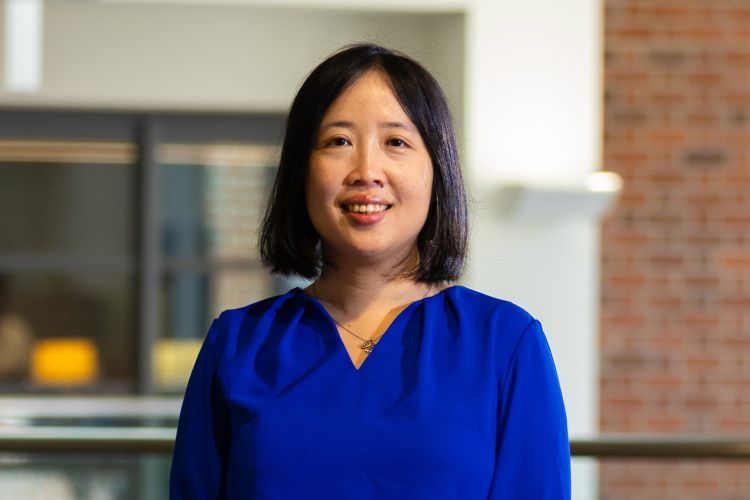
Advancing precision medicine through modeling informed by laboratory insights
Imagine if a health care team could anticipate how a specific patient would respond to a medication before it is given. Zhu Zhou ’14, PhD, associate professor of pharmaceutical sciences, believes this is possible.
Precision medicine takes into consideration factors such as an individual’s genetics, age and environment. Dr. Zhou uses a combination of laboratory experiments and advanced mathematical models to predict the body’s biological response to a drug.
“There are significant knowledge gaps in how complex drugs and natural products are deposited, how the body responds to them and how they interact with the human body,” said Dr. Zhou. “There is a critical need for precision medicine, and my research provides the framework to make that a reality.”
Students at the forefront of discovery
Research is an integral part of the Pacific experience. Students at every academic level can conduct research alongside faculty mentors. In a supportive environment, students gain hands-on experience, build real-world skills and contribute to innovative solutions that advance knowledge and improve lives. Learn more.