

Breadcrumb
Children’s book helps bridge understanding of Alzheimer’s disease
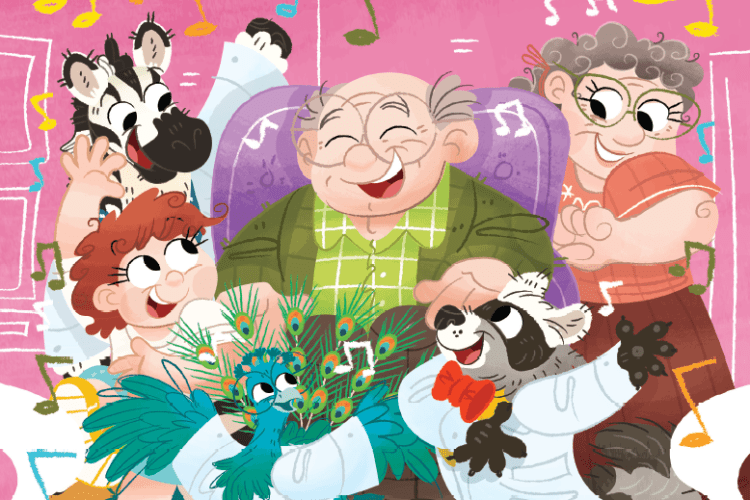
For families navigating Alzheimer’s disease, the small difference between one word or one note can open a big conversation. Myo-Kyoung Kim, PharmD, EdD, BCPS, APh hopes her book, “Grandpa’s Forgotten ARIA,” will help children and families understand memory loss in a way that feels safe, loving and approachable.
“Well, our brain cells have special substances that help them grow and repair. But sometimes, things don’t go as they should. When these substances break into little pieces, ‘boo-boos’ can occur,” writes Dr. Kim. “You see, our brains have tiny tracks that help carry around important things. Tau proteins are like ties that make the tracks stronger. But those sticky Beta Amyloid plaques can cause trouble. They may stop tau proteins from working properly.”
Drawing on her background in pharmacy and education, Dr. Kim translates complex disease states into language children can understand without losing warmth or meaning.
In her book, Grandpa Beppe’s love for arias, songs from opera, helps reveal the early signs of Alzheimer’s disease when he begins to forget the lyrics. Later, his doctor explains a potential side effect of Anti-amyloid-β monoclonal antibodies, known as Amyloid-Related Imaging Abnormalities (ARIA), offering families an age-appropriate way to understand both the condition and its care.
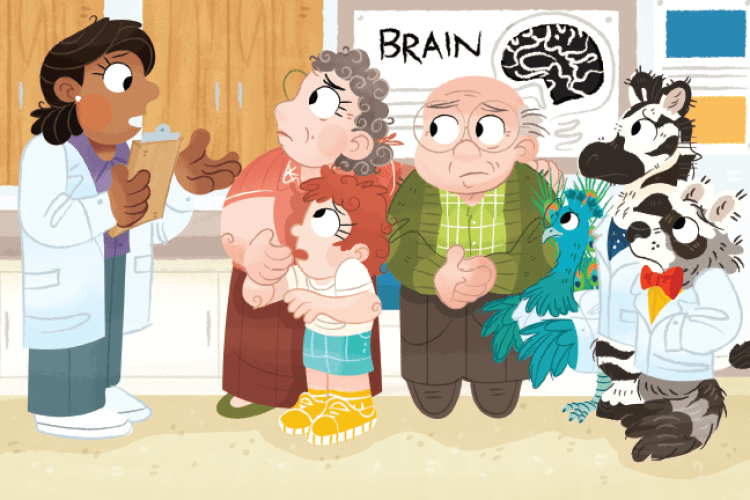
Created during her 2024 development leave, Dr. Kim’s book reflects her commitment to advancing health literacy beyond the classroom. By blending storytelling with science, Grandpa’s Forgotten ARIA offers families a gentle pathway to talk about memory loss, fostering understanding, connection and compassion across generations.
To increase accessibility, Dr. Kim has ensured the book is also available in English, Spanish, and Korean. “I have family members who have struggled with dementia and have heard many stories from patients and families as well,” she said. “My goal is to raise awareness about this disease and the impact it has on families and caregivers. I hope it gives readers hope and encouragement so that patients can continue to do what they love.”