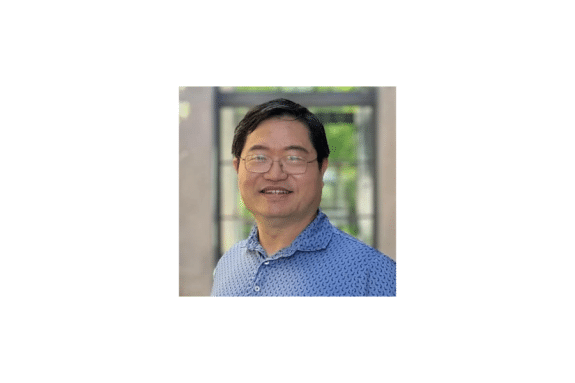


The Cheminar: Xin Guo, PhD (Thomas J Long School of Pharmacy)
The Cheminar: Xin Guo, PhD (Thomas J Long School of Pharmacy)

11:00 a.m. - 12:00 p.m.
Nano Formulations of Lipophilic Platinum Complexes Against Non Small Cell Lung Cancer
Lung cancer remains a leading cause of death worldwide. Conventional platinum complexes like cisplatin, while effective, are associated with significant systemic toxicity, particularly nephrotoxicity. Nanoformulations, such as liposome and micells, represent a promising approach to enhance anticancer activity and reduce off-target exposure of platinum complexes. A library of liposomal and micellar formulations of miriplatin were prepared by thin-film hydration or co-solvent evaporation. Physicochemical screening identified lead formulations with small, homogeneous size and high platinum loading, which were evaluated for anticancer activities against A549-iRFP multicellular spheroids (MCS) and in an orthotopic lung cancer mouse model. HPLC and LCMS studies showed that miriplatin underwent oxidation during co-solvent evaporation, yielding oxidized miriplatin-loaded micelles, MseDSPE-PEG and MseDOPE-PEG. Compared to cisplatin, these micellular formulations exhibited superior activity against A549-iRFP MCS and enhanced penetration into the compact, tumor-like MCS. In the orthotopic lung cancer model, MseDSPE-PEG showed activity comparable to cisplatin in suppressing tumor progression and metastasis while reducing renal toxicity. Pharmacokinetic profiling further demonstrated that MseDSPE-PEG markedly enhanced drug exposure compared to free cisplatin.
About the Speaker:
Dr. Xin Guo obtained his Ph.D. degree in Pharmaceutical Chemistry at University of California, San Francisco. He has been faculty in Thomas J Long School of Pharmacy for over 20 years. Dr. Guo’s research is focused on developing smart, nanometer sized formulations that carry medicines to their target sites in the body to enhance their therapeutic activity and safety. His funded research projects include the development of liposomes with a pH-sensitive conformational switch for triggered release of anticancer drugs in solid tumors, liposome-coated phosphate nanoparticles for the delivery of proteins into the cytosol, and most recently nano formulations of platinum complexes as potential medications for lung cancer. The research employs various chemical, physical, and biological approaches to design and characterize such drug formulations to tackle real-life challenges in the clinic.