

Breadcrumb
Expansion defines President Callahan’s legacy as WCC Presidents’ Council Chair
President Christopher Callahan
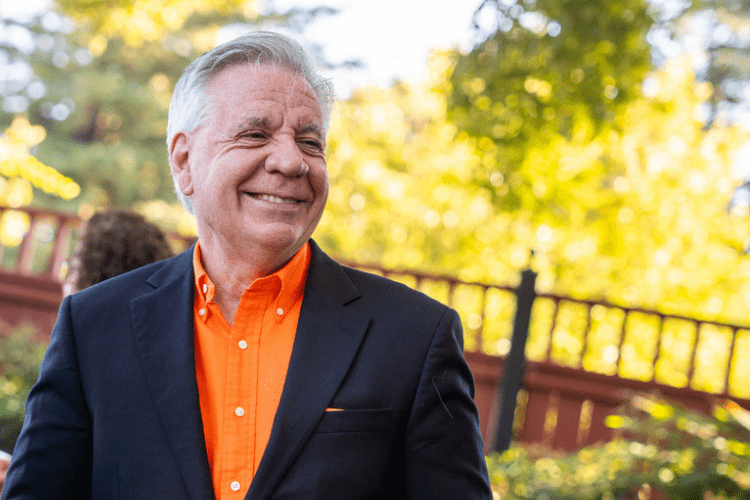
A year ago, as Pacific President Christopher Callahan was preparing for his one-year term as chair of the West Coast Conference Presidents’ Council, the league was smack in the middle of the highly disruptive NCAA conference realignment storm.
Long-time conference member Gonzaga University announced its departure, which would leave the West Coast Conference with just nine schools by the beginning of the 2026-27 athletics season.
Working closely with Commissioner Stu Jackson and the other presidents over the course of the next 12 months, Callahan helped add three new members, giving the WCC unprecedented strength, stability and its largest membership in history.
"Serving alongside President Callahan has been a privilege,” said Commissioner Stu Jackson. “He is an exceptionally engaged leader who never shied away from the difficult conversations facing college athletics or our conference. He approached every issue with thoughtful questions, sound judgment and a willingness to roll up his sleeves and help move the West Coast Conference forward. He wasn't simply interested in discussing ideas—he was committed to taking action.
"During one of the most consequential periods in our conference's history, Chris provided steady leadership that helped position the West Coast Conference for long-term success,” he added.
Callahan said the goal was not just to add universities, but to add academically excellent schools in the region that have highly competitive Division I athletic programs. “We needed to not just add schools but recruit universities that made sense for the future of our conference,” he said.
University of Denver officially joined the West Coast Conference July 1 while UC San Diego and UC Santa Barbara will join next summer.
“All three fit our conference’s model of high-level athletic competition and superb academics,” Callahan said. “But just as importantly, we wanted universities that were in our region. Geography matters.”
“We've seen these preposterous conference realignments where you have schools in California playing in Miami and Boston. What does that mean for the student-athlete experience when you're getting on a plane and having to go 3,000 miles away? We wanted to double down on the ‘West’ in West Coast Conference.”
Callahan also noted that the new additions will make it easier to do travel pairings for teams, scheduling road games at University of San Diego and UC San Diego for the same week, for example. That, he said, will allow visiting universities to schedule alumni, donor and student recruitment events in the same region around two games.
As the immediate past chair of the Presidents’ Council, Callahan will remain on the council's three-president executive committee for this year.
“Having the opportunity to work closely with Commissioner Jackson and our other presidents was a privilege,” Callahan said.
“The commissioner and our presidents are passionate about the importance of intercollegiate athletics, and always have the student-athlete experience front and center. In a time where there is so much change and confusion at the Division 1 level, Pacific is fortunate to be in a model athletic conference. While I know more challenges lie ahead, I believe our new 12-university conference gives us strength and stability for years to come.”