

Breadcrumb
Music therapy students turn heartbeats into lasting legacies
Students in University of the Pacific’s Conservatory of Music examined the impact of music therapy in hospice and palliative care during the Cadence of Life symposium, where they presented projects transforming patients’ heartbeat recordings into musical legacies.
The recent event was part of the Amplified Cardiopulmonary Recordings in Music Therapy course, led by Professor and Program Director Eric Waldon and Brian Schreck, a board-certified music therapist recognized for his work with heart beat recordings in hospice and palliative care.
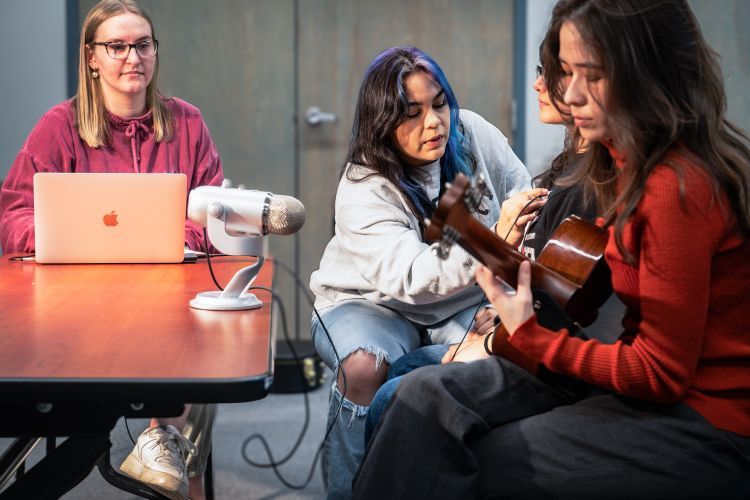
Students practice the heartbeat recording technique used to create musical legacy projects.
Students learned from established clinicians about hospice-based music therapy and how to support patients and families through music. Students also showcased their semester-long recording projects focused on turning a person’s heartbeat into a musical legacy.
“Music therapy and its applications require ongoing learning,” said Janice Smith ’27, a music therapy master’s equivalency student. “It’s wonderful to receive information and knowledge from experienced music therapists to take with me into the future.”
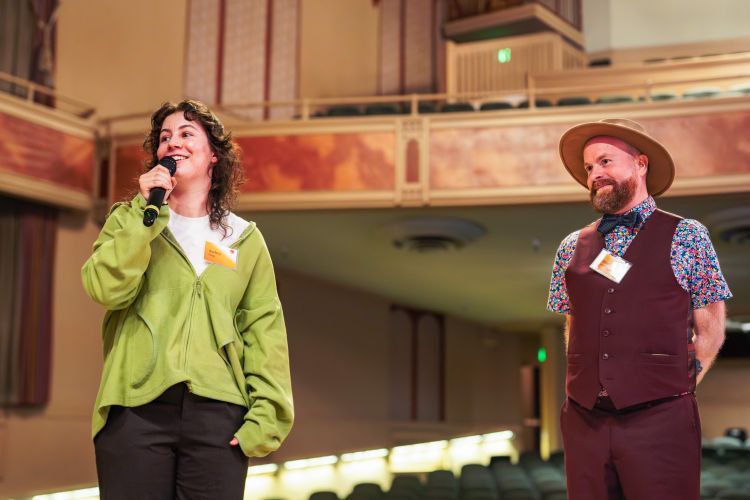
A student presents her project during the Cadence of Life: Music Therapy in Hospice and Palliative Care symposium.
Schreck, one of the symposium’s main speakers, has served people with a wide range of medical illnesses since 2004. He discussed how turning someone’s heartbeat into a musical recording can support people dealing with grief, anxiety and loss.
“Music therapy provides many roles with patients and their families. First and foremost, life is time. It is much like a song with a beginning, middle and end,” Schreck said. “Music on its own can help shape, structure and guide expression for any emotion.”
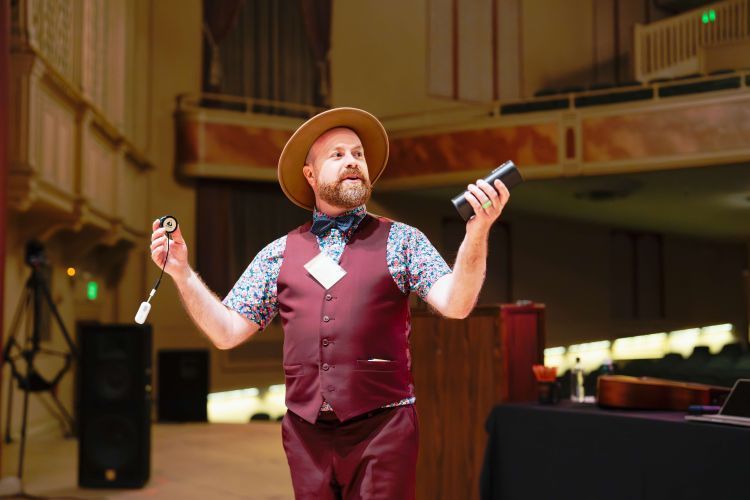
Board-certified music therapist and guest speaker, Brian Schreck, speaks to the attendees during the symposium.
While the semester’s projects were non-clinical and often involved students’ own friends, family members and pets, the work allowed students to become familiar with the process before sharing their projects with the broader public.
“This work can be deeply personal, especially because it brings students close to the realities of end-of-life care,” Waldon said. “To work effectively in these spaces, students need supportive, personalized and sensitive mentoring, something Pacific is known for.”
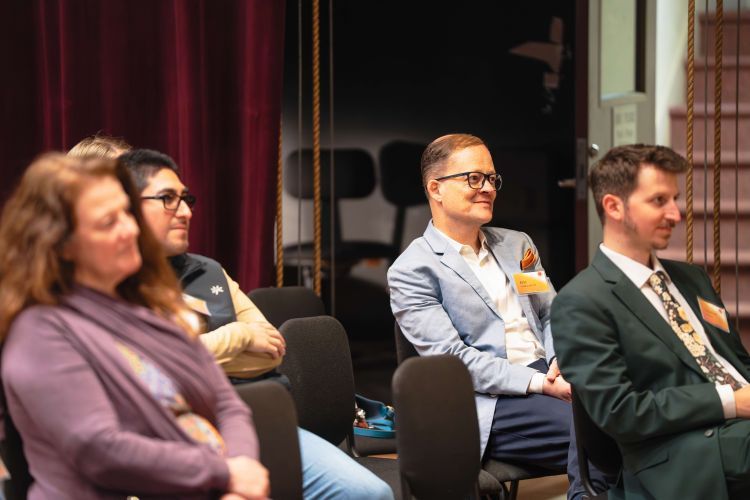
Music therapy professor and program director, Eric Waldon, takes mental notes.
The hands-on learning allows students to bridge classroom knowledge with the skills needed in the field. Through their classroom projects and conversations with practicing clinicians, students gained a deeper understanding of how music therapy can support patients and families during some of life’s most meaningful moments.