



Using girls’ scrapbooks and the publications of girls’ organizations, this paper examines American girls’ encounters with conservation in the early twentieth century. In 1919, a group of Camp Fire Girls trekked into Hetch Hetchy Valley, where they studied nature and learned about the damming project that would soon flood the valley. Their accounts reflect the language of the emerging conservation movement and echo John Muir's reverence for wilderness cathedrals. But they also celebrate O’Shaughnessy Dam as an engineering marvel and eagerly anticipate the valley's flooding. Building on Susan Schrepfer’s work on women in the conservation movement and Susan Miller’s research on girls’ camping, I argue that three factors explain the contradiction. First, girls’ organizations drew upon familiar ideas about women as nurturing helpmates. Befriending flora and fauna was an easy extension but a sentimental one. Second, girls’ programs paired nature study with “Indian lore,” elevating mythic “Indians” while ignoring the removal of Indigenous people from national parks. Third, girls’ citizenship was depoliticized because they learned little about the actual controversy and costs of damming the Tuolumne. The resulting environmental education let girls hold contradictions such as reverence for wilderness and enthusiasm for its flooding.

Breadcrumb
Hetch Hetchy, American Girls, and the Nature of Conservation
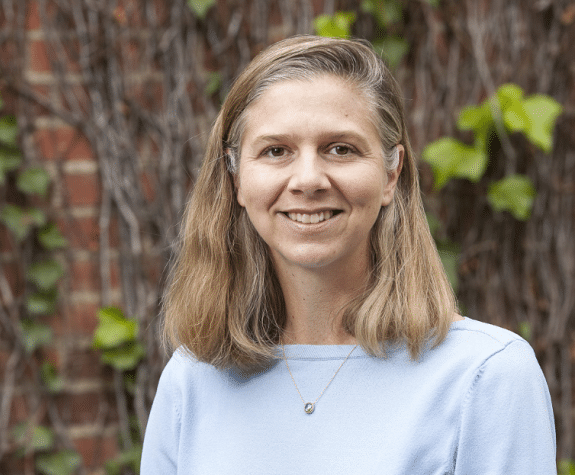
Jennifer Helgren is Professor of History and Rockwell Hunt Chair of California History at the University of the Pacific in Stockton, California, where she also serves as Director of General Education. A feminist historian whose research examines the intersections of gender, race, age, and citizenship, she is the author of The Camp Fire Girls: Gender, Race, and American Girlhood, 1910–1980(University of Nebraska Press, 2022); American Girls and Global Responsibility (Rutgers University Press, 2017); and several articles on girlhood and US history. She is the co-editor with Colleen Vasconcellos of Girlhood: A Global History (Rutgers, 2010). She has also contributed to several digital history projects, including Little Manila Recreated Virtual Reality Game and Kizuna: Bonds Beyond Incarceration App.