



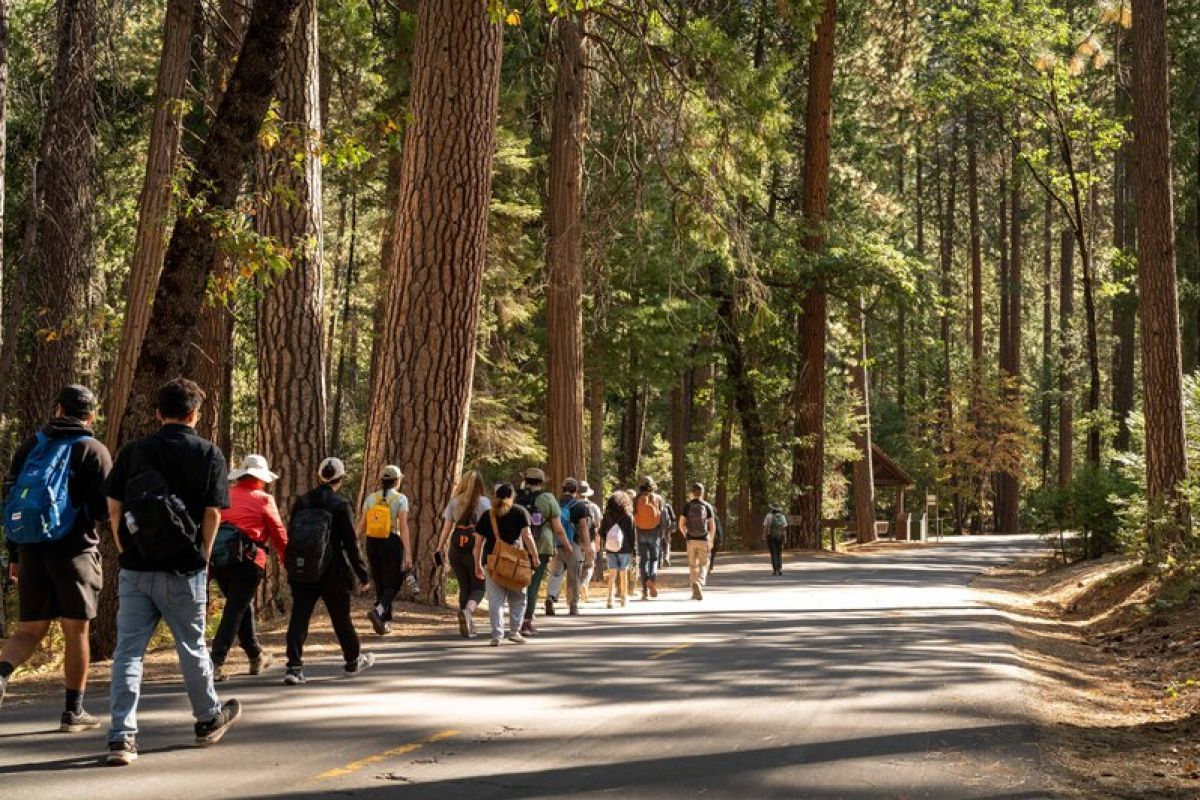

What gives a place its meaning? Is it the landscape itself, the experiences of those who encounter it, or the accumulated histories and ideas that shape how we understand it? Few American landscapes illustrate these questions more powerfully than Yosemite Valley, where natural beauty became inseparable from spiritual significance, national identity, and moral responsibility. By the late nineteenth century, Yosemite had acquired extraordinary moral authority in the American imagination. This transformation emerged from evolving ideas about wilderness — from colonial notions of disorder and Enlightenment rationalization to Romantic reverence for the sublime and Transcendentalist understandings of nature as a source of spiritual truth. Through artistic representation, Indigenous displacement, and legislative preservation, Yosemite became a defining expression of these ideas, celebrated as pristine wilderness even as its human history was obscured.
At the center of this transformation stands John Muir, whose sustained experiences in the Sierra Nevada gave the emerging wilderness ideal personal meaning and political purpose. Building upon earlier intellectual movements, Muir translated his intimate sense of place into a broader moral conviction: landscapes capable of restoring human perception and character were not luxuries, but necessities deserving public protection. This presentation explores how Yosemite acquired its moral authority and how Muir helped transform a personal connection to place into a collective obligation to preserve it. In doing so, it also examines the contradictions of a preservation tradition that celebrated wilderness while obscuring other histories. Yosemite's enduring sense of place emerges not simply from its natural grandeur, but from the complex intersection of landscape, memory, philosophy, and human experience.