

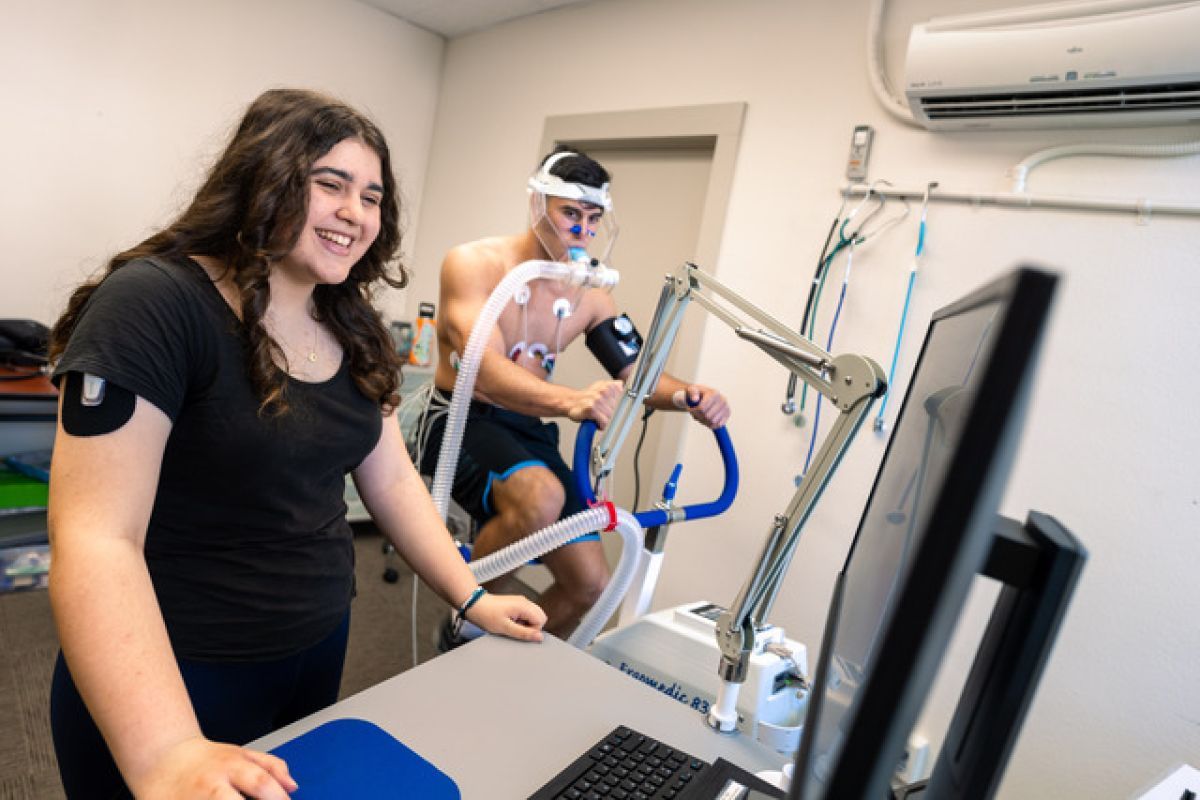
Advance Your Career in Clinical Exercise Science.

Exercise is one of the most powerful tools in modern healthcare. Pacific's MS in Applied and Clinical Exercise Science helps you turn exercise science into evidence-based practice for patients, clients and communities — fully online and on your schedule.
PROGRAM COMING FALL 2027

100% online, no set class times

Finish in 1-2 years, or over 2 summers

32 units
8 courses

What you'll learn

You’ll build the knowledge to design and evaluate exercise programs for people across the health spectrum. Explore topics like: 

  • Exercise physiology and functional movement
  • Stress physiology
  • Nutrition
  • Aging and chronic disease
  • Research methods and epidemiology
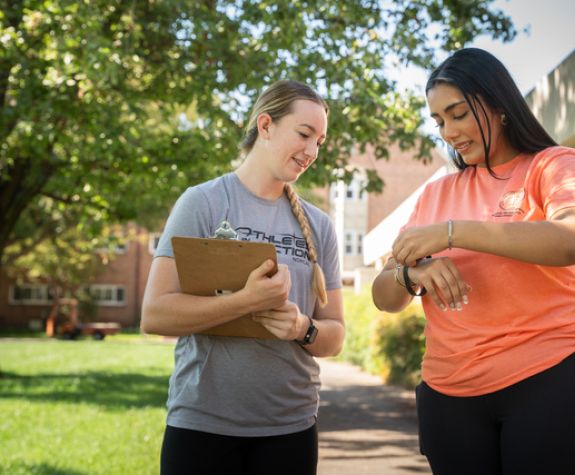
Exercise Science students conduct wellness checks for Exercise is Medicine
Applied learning
From textbook to treatment plan.

Case-based courses have you work through realistic scenarios and make the decisions you’d make in practice. You’ll learn to:

  • Evaluate movement and build corrective exercise programs
  • Recognize pathological stress responses and identify treatments
  • Design and evaluate programs for health, clinical and performance settings
Flexible by design
Choose your pace.

Finish the same 32-unit degree on the timeline that fits your life:

  • 1 Year: all eight courses, starting in summer
  • 2 Year: two courses each fall and spring
  • 2 Summers: four courses each summer, keeping your school year free.


Courses are fully online and can be taken in any order.

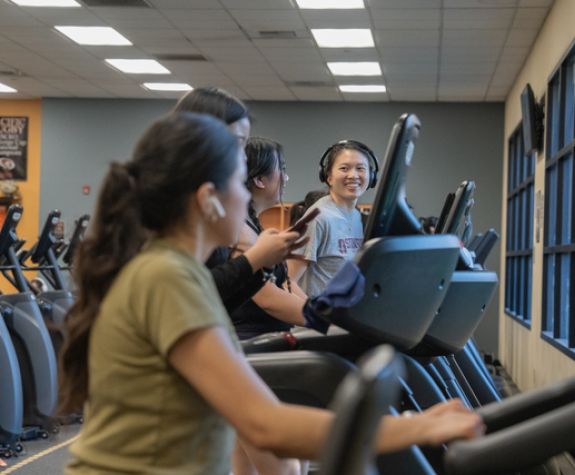
Students exercising on treadmills
HLTH 210 
Applied Exercise Science:  Exercise is Medicine

Turn physiology, biomechanics and motor control into evidence-based exercise programs for diverse populations in health, clinical and performance settings.

HLTH 212 
Human Performance Physiology

Explore bioenergetics, thermoregulation, recovery and overtraining, plus how health-monitoring technology supports performance.

HLTH 214 
Functional Movement Analysis

Study musculoskeletal anatomy, posture and neuroanatomy, then apply them to case-based evaluations and corrective exercise programs.

HLTH 216 
Graduate Research & Scientific Writing

Learn to design a research plan, evaluate the literature and write scholarly work, finishing with a full research proposal.

HLTH 218 
Stress Physiology

Examine how the body responds and adapts to environmental and lifestyle stressors, from heat and altitude to sleep disruption and inactivity.

HLTH 220 
Exercise and Sports Nutrition

Apply evidence-based nutrition strategies to energy metabolism, performance, recovery and body composition.

HLTH 222 
Pathophysiology: Aging, Chronic Disease & Exercise

Understand aging and major chronic diseases, and the role of exercise as prevention and therapy.

HLTH 224 
Epidemiology in Exercise Science

Learn to gather, analyze and interpret data, and to appraise the quality of health research.

Admission Requirements

  • Bachelor's degree with minimum 2.65 GPA
  • Official transcripts
  • 2 letters of recommendation
  • Personal statement
  • Resume or CV

APPLICATION COMING SOON

  • Bachelor's degree must be from an accredited institution. 
  • A minimum 2.65 GPA is required both cumulatively and in major.
  • No GRE or prerequisite coursework is required.
  • A health and exercise science field is preferred. Other majors will be considered and may need to show success in science coursework.
  • The program provides Guaranteed Admission for University of the Pacific Health and Exercise Sciences graduates with a Pacific GPA of 3.0 or higher

Career Outlook

Graduates are prepared for roles in clinical exercise, healthcare, wellness and research. Typical settings include hospitals, rehabilitation programs, outpatient care, research facilities, wellness programs, government agencies, nonprofits and universities. The degree is also a strong foundation for advanced study in physical therapy, physician assistant, athletic training, occupational therapy, dietetics, nursing and medicine.

Frequently Asked Questions

You can finish in as little as one year by starting in summer, or take two years on the standard path starting in fall. A two-summer option is also available.

Yes. The program is fully online and asynchronous, designed for working professionals and students with family or other obligations.

A bachelor's in a health and exercise science field is preferred, but applicants from other disciplines are considered and may need to show success in science-based undergraduate coursework.

No. There are no prerequisite courses, and the eight courses can be taken in any order.

No. If you want to pursue the American College of Sports Medicine Certified Clinical Exercise Physiologist (ACSM-CEP) credential, we'll help you find clinical sites to complete the required hours

Mission & Goals

Mission

To prepare graduates for leadership roles in healthcare, wellness and performance settings through scientific inquiry, evidence-based application and critical thinking.

Goals

  • Apply advanced exercise science, including emerging technologies, to diverse populations and settings
  • Think critically and communicate scientific and clinical information clearly
  • Lead, collaborate and keep learning as the field evolves